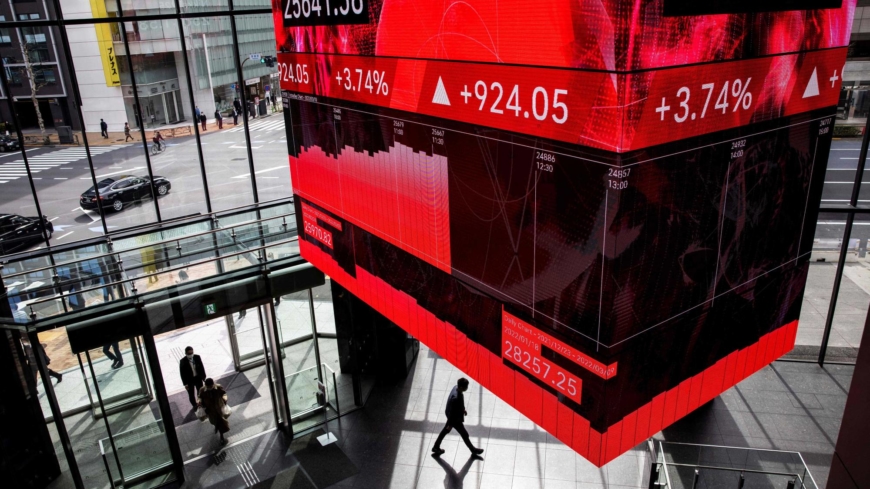

Chinese equities have tumbled into a bear market, with roughly $2.4 trillion in value wiped out since a peak in May, as a prolonged consumption slump and mounting doubts over AI companies’ profitability turn the market into one of the world’s worst performers.
The CSI 300 Index closed 1.8% lower on Thursday, extending a losing streak into its tenth straight week and bringing total losses from its June high to 20%, the threshold that formally marks a bear market.
Much of the selloff traces back to the unwinding of the global AI trade, which had powered a significant share of Chinese equity gains earlier in the year, combined with the absence of a fresh stimulus package heading into a crucial corporate earnings season.
While Chinese policymakers have stepped up market-supportive measures in recent months, investors have been disappointed by the lack of a broad-based spending package, with economic growth barely meeting national targets rather than exceeding them.
The selloff has not been confined to the mainland: gauges tracking major Chinese companies and technology firms listed in Hong Kong have also plunged, part of a months-long decline that has shown few signs of abating.
With AI-related enthusiasm fading globally and domestic stimulus still falling short of investor expectations, the question now facing Chinese markets is whether the bear market proves to be a temporary correction or the start of a deeper and more prolonged downturn.